
Pterygium (Surfer’s Eye): Causes, Symptoms, Treatment and Surgery Explained
Pterygium: what the "flesh" growing on your eye really is, why it happens, and what can be done about it
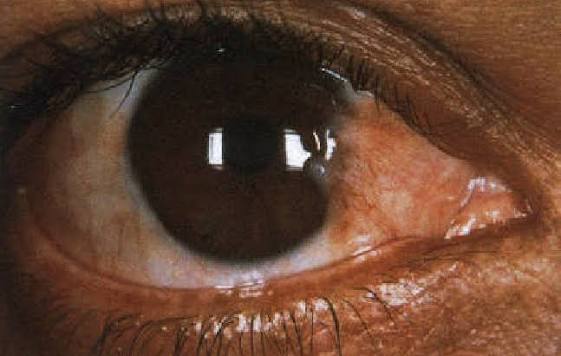
Picture Mr Mensah, a 52-year-old farmer who has spent most of his life on his cocoa farm outside Kumasi. For years, he has noticed a small pinkish patch on the white of his eye, on the side closest to his nose. He ignored it. “It’s just from the sun and dust,” he told his wife.
Then, over a couple of rainy seasons, it grew. Now it has crept onto the clear part of his eye. His eye feels gritty by midday, it turns red whenever the harmattan dust blows, and the letters on his phone look smudged. His wife finally says what he has been avoiding: “Go and show it to an eye doctor.”
If you have a growth like this, you are not alone. It is called a pterygium (pronounced tuh-RIJ-ee-um), and it is one of the most common reasons people in sunny climates walk into an eye clinic. This guide explains everything you need to know in plain language, without the fear.
Key facts:
- It most often grows on the nasal side (the side nearest your nose), though it can occur on the outer side too.
- It can affect one eye or both.
- It is not cancer, and it is not contagious.
- It tends to grow slowly, and in some people it never grows beyond a small size.
It is sometimes called “surfer’s eye” because surfers, who spend hours in strong sun and wind by the water, develop it often. In Ghana, you do not need to surf to qualify. Farmers, fishermen, traders at open markets, drivers, bricklayers and anyone who spends long hours outdoors are all at risk.
What Causes a Pterygium?
Doctors do not fully understand every step, but the main driver is well established: long-term exposure to ultraviolet (UV) light. Over time, UV damage seems to disturb the normal behaviour of cells at the edge of the cornea, triggering the abnormal tissue growth.
The recognised risk factors include:
- Sun exposure. This is the biggest one. Living closer to the equator, as we do in Ghana, raises the risk.
- Wind, dust and dry conditions. The harmattan season, construction sites and dusty farm roads all irritate the eye surface.
- Outdoor work or hobbies. Farming, fishing, trading, driving, construction and sports like football, where players spend hours under the sun.
- Chronic dry eye. A poorly lubricated eye surface is more vulnerable to irritation.
- Age. It is more common in adults, typically from the 20s and 30s upwards, and its frequency rises with age.
- Possibly smoke and chemical irritants.
- Genetic factors may play a role in some families.
Here is a familiar example. Two sisters grow up in the same house. One works in an air-conditioned office. The other sells vegetables in an open-air market from dawn until evening. Twenty years later, the market trader is far more likely to be the one sitting in the clinic with a pterygium. Their eyes started the same, but their exposure did not.
Note that many people mistakenly think a pterygium comes from “too much phone use” or “from someone’s evil eye”. Neither is true. Sun, wind and dust are the main culprits.
Symptoms: What Does a Pterygium Feel and Look Like?
A pterygium may be painless in its early stages, and many people only discover it when a friend says, “What’s that on your eye?” As it develops, you may notice:
- A visible pink or red, fleshy growth on the white of the eye, extending towards the coloured part
- Redness, especially after sun, wind or dust
- Burning, itching or stinging
- A gritty or foreign-body sensation, as if sand is stuck in your eye
- Watery eyes or, paradoxically, a dry feeling
- Blurred or distorted vision, especially when the growth reaches the cornea
- Difficulty wearing contact lenses
- Cosmetic concern, particularly when the redness is noticeable in photographs
Consider Abena, a university student who loves her photos on social media. Her left eye always looks redder than her right, and she has been using “eye whitening” drops from a roadside kiosk for months. The drops make the redness disappear for an hour, then it returns, sometimes worse. She is treating the colour but ignoring the cause. A proper eye examination would have told her what she was dealing with.
How a Pterygium Can Affect Your Vision
A pterygium does not always affect vision, but it can in two main ways:
- By growing across the cornea. If it reaches the centre of the cornea (the visual axis), it physically blocks light from entering the eye.
- By distorting the cornea’s shape. As the growth pulls on the cornea, it can create astigmatism, an uneven curvature that blurs or distorts vision. This is why some patients notice that their glasses prescription changes, or that their vision seems “smudged” even with glasses.
If the astigmatism is caused by a pterygium, glasses alone may not give a lasting solution, because the growth continues to change the cornea’s shape.
How Is a Pterygium Diagnosed?
The good news is that a pterygium is usually easy to recognise during an eye examination. Your eye care professional will typically:
- Ask about your symptoms and history. This includes your occupation, how much time you spend outdoors, whether you use sunglasses, and whether the growth has changed.
- Check your visual acuity to see how clearly you can see.
- Examine the eye under a slit lamp. This is a microscope with a bright light that gives a magnified view of the front of your eye, showing the size, thickness and blood supply of the growth and how far it has crossed the cornea.
- Assess the cornea’s shape. Where needed, a corneal topography scan maps the curvature to check how much astigmatism the growth is causing.
- Check the overall eye surface. This includes the tear film, to see whether dry eye is contributing.
- Rule out other conditions. Rarely, a growth on the eye can be something other than a pterygium, such as other surface lesions. If anything looks unusual, a more detailed assessment is arranged.
Because the growth is usually clear to see, the examination itself is quick and painless.
Treatment Options for Pterygium
Treatment depends on size, symptoms, growth rate and effect on vision. Not every pterygium needs an operation.
1. Observation (watchful waiting)
If the pterygium is small, not growing and not causing problems, your doctor may simply recommend regular check-ups to see whether it changes. Many people live comfortably with a small pterygium for years.
2. Lubricating eye drops
Artificial tears can ease the dryness, burning and grittiness. They help the symptoms but do not remove or shrink the growth.
3. Short courses of anti-inflammatory drops
When the pterygium becomes inflamed, a doctor may prescribe a short course of mild anti-inflammatory drops to calm the redness and discomfort. These should be used only under medical guidance, because some eye drops, steroids in particular, carry risks if misused.
A strong warning here: do not buy “redness-removing” or steroid eye drops from a kiosk, pharmacy shelf or street vendor and use them for weeks. Long-term, unsupervised use of some drops can cause serious problems, including raised eye pressure and other complications. If you are already using drops without advice, please bring the bottle with you to your appointment.
4. Protective measures
Wearing sunglasses that block UV light, together with a wide-brimmed hat, helps reduce further irritation and may slow progression. Wraparound styles also help shield the eyes from wind and dust.
5. Surgery
Surgery may be recommended when:
- The pterygium is growing towards or over the pupil area
- It is causing significant blurring or astigmatism
- It is persistently inflamed or uncomfortable despite drops
- It limits eye movement (in large cases)
- The appearance is distressing you (a valid reason, though cosmetic surgery should be discussed carefully)
Pterygium Surgery: What to Expect
Many patients dread the word “surgery” for an eye problem. Let us walk through it gently, using Mr Mensah as our example.
The operation itself
- It is typically performed under local anaesthetic, so the eye is numbed and he stays awake and comfortable. Some patients feel pressure or touch but not pain. Sedation may be offered to help anxious patients relax.
- The surgeon removes the pterygium from the surface of the eye.
- To reduce the chance of regrowth, the area is then usually covered with a conjunctival autograft. This is a small piece of the patient’s own healthy conjunctiva, taken from under the upper eyelid, where it is hidden, and placed over the area. It is held in place with either stitches or a special tissue glue (fibrin glue).
- Some surgeons also use other techniques or medicines during surgery to lower the chance of recurrence, depending on the case.
The procedure commonly takes in the region of 20 to 30 minutes, though this varies from patient to patient.
Why not just "cut it off"?
Years ago, simply removing the growth (known as the “bare sclera” technique) was common. The problem was that the pterygium came back, sometimes bigger and more aggressive than before. Modern techniques, particularly the conjunctival autograft, have significantly reduced the chance of recurrence.
Can a Pterygium Go Away on Its Own?
No. Once a pterygium has formed, it does not go away by itself, and eye drops will not make it disappear. Drops can soothe symptoms, and protection from the sun may slow it down. But the tissue remains. Some pterygia stay small for life, while others slowly grow, which is why monitoring matters
Common Myths About Pterygium
“It’s cancer.”
A pterygium is benign. However, because other surface growths exist, any new or unusual lump on the eye should be checked by a professional rather than assumed to be harmless.
“Eye drops from the pharmacy will melt it away.”
They will not. Some only mask redness, and misuse can cause harm.
“Surgery will make me go blind.”
Pterygium surgery is a recognised, commonly performed procedure, and when done by a trained surgeon it is aimed at protecting and improving your vision, not risking it.
“It will definitely grow back, so why bother?”
Recurrence is possible, but modern techniques and good aftercare reduce the risk significantly. Leaving a growing pterygium untreated can lead to progressive vision problems.
“Traditional or herbal eye remedies can treat it.”
Putting unverified substances into the eye can cause infections, burns and permanent damage. Please do not do this.
“I can use my neighbour’s eye drops. Our eyes are the same.”
Eye drops are not interchangeable, and the wrong one can make things worse.
How to Prevent a Pterygium (or Slow It Down)
You cannot control your genes, but you can reduce your risk and protect your eyes:
- Wear UV-protective sunglasses whenever you are outdoors, even on cloudy days. UV light does not need bright sunshine to reach your eyes. Check the label for UV protection (look for UV400 or “100% UV protection”).
- Add a wide-brimmed hat or cap for extra shade.
- Choose wraparound frames if you work in dusty or windy environments.
- Wear protective eyewear on construction sites, farms and workshops.
- Keep your eyes lubricated if you have dry eye symptoms.
- Avoid rubbing your eyes.
- Get regular eye check-ups, especially if you spend long hours outdoors.
Think of sunglasses the way you think of a helmet for a motorbike rider. It is not a fashion accessory. It is protection.
Frequently Asked Questions
Is pterygium dangerous?
It is not cancer and not usually dangerous, but it can affect vision and comfort if it grows. It should be monitored.
Is pterygium contagious?
No. You cannot catch it from someone else.
Can a pterygium affect both eyes?
Yes. It can occur in one eye or both, and the two may differ in size.
Does a pterygium always need surgery?
No. Small, stable, symptom-free ones are often just monitored. Surgery is considered when the growth threatens vision, causes significant symptoms, or keeps getting worse.
Will it come back after surgery?
It can. Modern techniques have lowered recurrence rates, and following aftercare advice and protecting your eyes from the sun help.
How long does recovery take?
The initial recovery is usually days to a few weeks, but redness may take longer to settle fully. Your surgeon will guide you.
Can I go back to work after surgery?
This depends on your job and your surgeon’s advice. People who work in dust or direct sun may need extra time off and protective eyewear.
Can children get a pterygium?
It is much more common in adults, but it can occasionally occur at younger ages, especially with heavy sun exposure. Any child with a growth on the eye should be examined.
Is pterygium the same as a cataract?
No. A cataract is clouding of the eye’s inner lens, while a pterygium is tissue growth on the eye’s surface. They are separate conditions. See our article on cataracts for more.
In conclusion, pterygium is common, manageable and, in most cases, very treatable, especially when it is caught early. The key is not to ignore it, not to self-medicate, and not to be afraid. Whether you are a farmer, a trader, a student or a professional, if you notice a growth, redness or persistent irritation on your eye, a professional examination will give you answers and a clear plan.
If you live in Kumasi or the surrounding communities, Rods & Cones Eye Care Services is here to help. Book your eye examination today via 0509545771