
Retinal Detachment: Warning Signs You Should Never Ignore
What Is Retinal Detachment?
Imagine looking at the sky and suddenly noticing flashes of light. A few moments later, small dark spots begin floating across your vision. Then, you notice what looks like a dark curtain covering part of what you can see.
These may be warning signs of retinal detachment, a serious eye condition that requires immediate medical attention.
Although some flashes and floaters are harmless, sudden changes in your vision should never be ignored. Knowing what to look out for could help protect your sight.
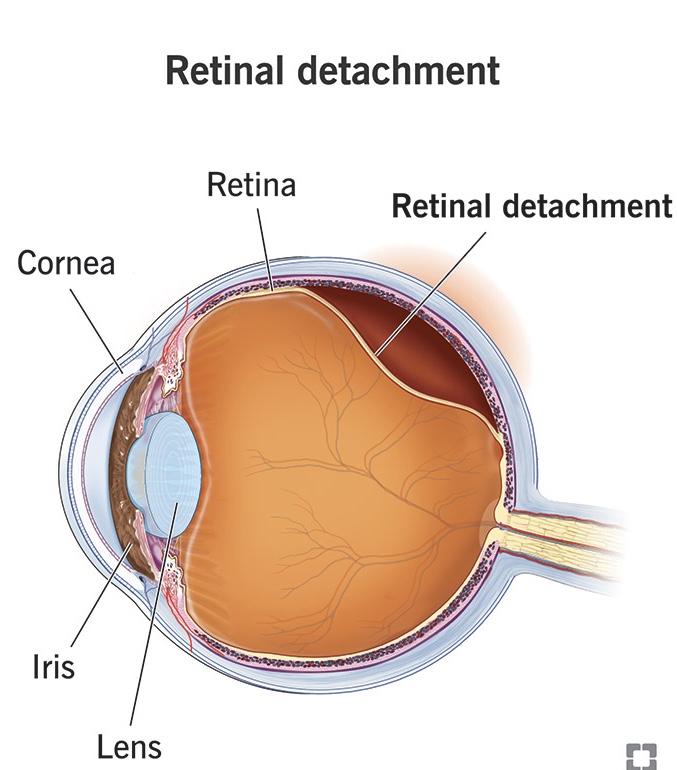
The retina is a thin, light-sensitive layer at the back of your eye. It receives light and sends visual signals to your brain, allowing you to see.
Retinal detachment occurs when the retina separates from its normal position at the back of the eye. When this happens, it can no longer function properly.
Without prompt treatment, retinal detachment can lead to permanent vision loss. The condition is an eye emergency, and early assessment and treatment can help protect your vision.
3 Warning Signs of Retinal Detachment
1. Flashes of Light
Have you ever noticed sudden flashes of light in your vision, even when there is no obvious source of light around you?
These flashes may appear like:
- Brief streaks of light.
- Lightning-like flashes.
- Small flashes at the edge of your vision.
- A sensation similar to seeing stars.
Flashes can occur when the gel inside the eye pulls on the retina. Sometimes, this pulling can cause a retinal tear, which may lead to retinal detachment.
If you suddenly begin experiencing flashes of light, especially if they are repeated or accompanied by floaters, seek urgent eye care.
2. A Sudden Increase in Floaters
Floaters are small shapes that appear to drift across your vision. They may look like:
- Tiny black dots.
- Squiggly lines.
- Cobwebs.
- Small specks or rings.
Many people have a few floaters, and they are often harmless. However, a sudden increase in floaters is different.
If you suddenly notice many new floaters, particularly alongside flashes of light, it could indicate a retinal tear or detachment.
Do not assume that the spots will disappear on their own. Arrange an urgent eye examination.
3. A Curtain-Like Shadow in Your Vision
One of the most concerning warning signs is a dark or grey shadow that appears to move across your field of vision.
Some people describe it as a curtain, veil or shade covering part of their sight.
The shadow may begin at the edge of your vision and gradually spread towards the centre. It may affect your ability to see clearly in that area.
This can indicate that the retina has detached. If you notice a curtain-like shadow, seek immediate medical attention. Do not wait for it to disappear.
Can Retinal Detachment Happen Without These Symptoms?
Yes. Some people may not notice symptoms when only a small part of the retina is affected.
Others may experience sudden blurry vision or a noticeable reduction in their sight.
This is why regular comprehensive eye examinations are important, particularly for people who have risk factors for retinal problems.
Who Is at Risk of Retinal Detachment?
Retinal detachment can happen to anyone, but certain factors may increase the risk, including:
- Severe short-sightedness (high myopia).
- Previous eye surgery.
- A serious eye injury.
- A previous retinal tear or detachment.
- A family history of retinal detachment.
Having one or more risk factors does not mean you will definitely develop retinal detachment. However, it is important to discuss them with your eye care professional.
What Should You Do If You Notice These Warning Signs?
If you experience sudden flashes of light, a sudden increase in floaters, or a curtain-like shadow in your vision:
- Seek immediate eye care. Contact an ophthalmologist or go to the nearest hospital emergency department with eye care services.
- Do not wait until the next day or your next routine appointment. Retinal problems can worsen quickly.
- Do not drive yourself if your vision is affected. Ask someone to take you for assessment.
An eye examination, usually involving dilating the pupils to examine the retina, can help determine whether there is a retinal tear or detachment.
Treatment may involve laser procedures or surgery, depending on the condition and how much of the retina is affected
Protect Your Vision: Act Quickly
Retinal detachment is not something to manage at home or treat with ordinary glasses. It requires prompt assessment by an eye care professional.
If you notice sudden flashes of light, many new floaters or a curtain-like shadow, do not ignore the signs, even if you are not experiencing pain.
At Rods & Cones Eye Care Services in Kumasi, we encourage you to take changes in your vision seriously. If you experience these warning signs, seek immediate medical attention rather than waiting for a routine appointment.
Your vision is precious. Acting quickly could make a difference in protecting it.